
Melamine vs. PVC Edge Banding
Melamine vs. PVC Edge Banding: A Comprehensive Comparison Meta Description: Discover why upgrading from melamine to PVC edge banding reduces defect rates and improves the quality of your cabinets and furniture boards.
Melamine vs. PVC Edge Banding: A Comprehensive Comparison
In the competitive world of panel furniture manufacturing, controlling costs while maintaining quality is a daily challenge. When it comes to sealing the exposed edges of MDF or particleboard, factory owners often debate between two budget-friendly options: Melamine and PVC.
While melamine paper edge banding was the traditional go-to for decades, PVC edge banding has largely replaced it in modern production lines. Here is a comprehensive comparison explaining why this shift occurred.
What is Melamine Edge Banding?
Melamine edge banding is essentially a specialized, heavy-weight paper impregnated with melamine resin.
The Appeal: It is extremely cheap and often comes pre-glued, making it popular for DIY projects or very low-budget, flat-pack furniture.
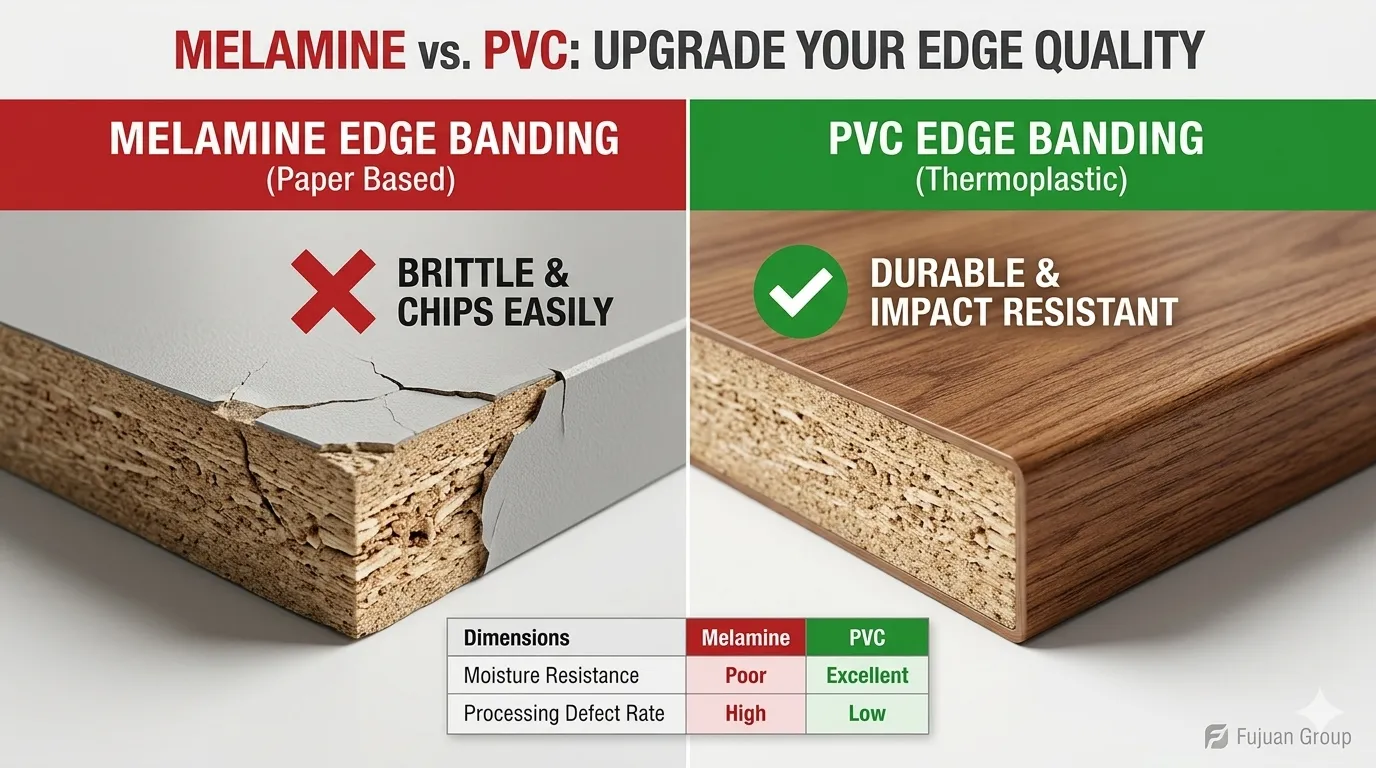
The Problem: Because it is paper-based, melamine is inherently brittle. It is highly susceptible to chipping and cracking during the trimming process on edgebander machines. Furthermore, it offers almost zero impact resistance. A slight bump from a chair or vacuum cleaner can cause the edge to shatter, leading to customer complaints and high defect rates.
The Superiority of PVC Edge Banding
Unlike paper, a pvc edge band is an extruded thermoplastic. This fundamental difference in material changes everything on the production floor.
High Impact Resistance: PVC acts as a protective bumper for the furniture board. It absorbs impacts without chipping, ensuring a longer lifespan for cabinets and desks.
Moisture Protection: PVC is entirely waterproof. When applied with quality hot melt adhesive, it effectively seals the wood core from moisture, preventing the board from swelling—a critical feature for kitchen and bathroom cabinetry.
Design Versatility: Extrusion technology allows PVC to mimic natural materials flawlessly. A high-quality wood grain edge band in PVC features physical textures (like ticking and pores) that flat melamine paper simply cannot replicate.
Why the Upgrade is a Smart Investment
While the initial cost per meter of a pvc edge band is slightly higher than melamine, the Return on Investment (ROI) is undeniable. By switching to PVC, manufacturers drastically reduce their machining defect rates, eliminate chipped edges, and produce a premium-feeling product that justifies a higher retail price.
Upgrade your production line quality today. Browse Fujuan Group’s extensive catalog of PVC edge banding, available in thicknesses from 0.4mm to 3mm.