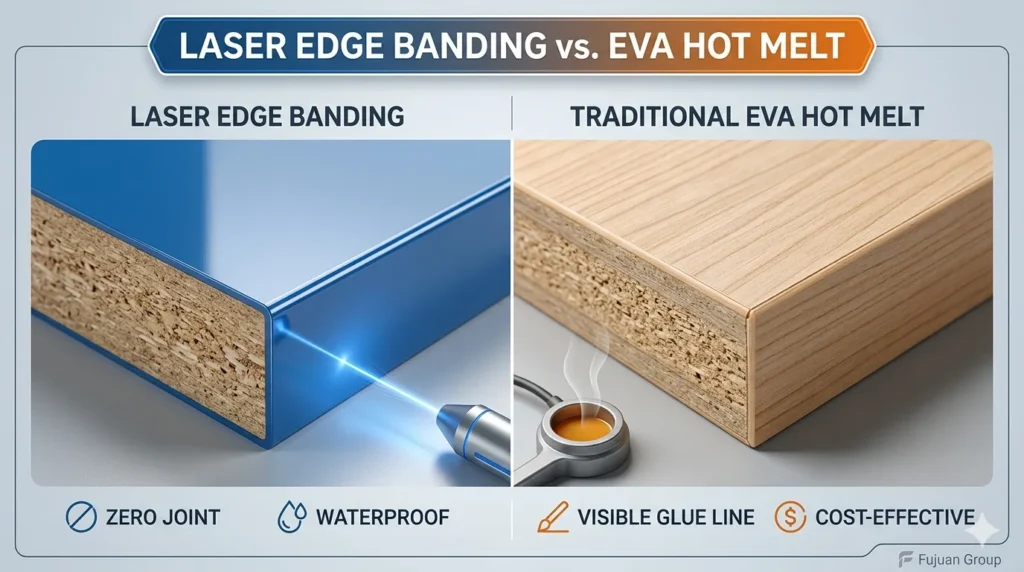
Laser Edge Banding vs. EVA Hot Melt
Laser Edge Banding vs. Traditional EVA Hot Melt: Pros and Cons Meta Description: Analyze the differences between traditional EVA hot melt glue and advanced laser edge banding technologies to optimize your woodworking production.
Laser Edge Banding vs. Traditional EVA Hot Melt: Pros and Cons
As architectural designs lean towards sleek, minimalist aesthetics, the demand for “seamless” furniture is at an all-time high. For woodworking professionals and factory engineers, achieving this flawless look comes down to the application method.
Today, the industry is witnessing a technological face-off: Traditional EVA Hot Melt versus advanced Laser Edge Banding. Let’s evaluate the pros and cons of both systems to help you optimize your manufacturing process.
Traditional EVA Hot Melt Edge Banding
Ethylene Vinyl Acetate (EVA) hot melt adhesive has been the backbone of the furniture industry for decades. The process involves heating solid glue pellets and applying them to the board before pressing the edge banding tape.
The Pros: * Cost-Effective: EVA glue is highly affordable, and the machinery required is accessible to woodworking shops of all sizes.
Versatility: It works well with almost any edge material, from thick 1mm pvc edge banding to thin veneers.
The Cons: * The Glue Line: EVA inherently leaves a visible glue joint. Over time, this glue line can collect dirt and darken, disrupting the visual continuity, especially on a bright white edge tape or high-gloss finishes.
Heat & Moisture Sensitivity: EVA can reactivate under extreme heat (like next to an oven) and offers limited resistance to heavy moisture.
Advanced Laser Edge Banding
Laser edge banding (or zero-joint edge banding) eliminates the glue pot entirely. Instead, it uses a specialized edge banding tape that features a pre-applied, color-matched functional polymer layer. A highly focused laser (or hot air system) melts this functional layer just before it is pressed onto the board.
The Pros:
The Invisible Joint: Because there is no traditional glue, the transition between the board and the edge is completely seamless. It creates the illusion of a solid, painted piece of wood or acrylic.
Superior Resistance: The melted polymer creates a permanent, waterproof bond that will not peel under heat or humidity.
The Cons:
High Initial Investment: Laser edge banding machinery requires a massive capital investment, often making it viable only for large-scale, high-end cabinet manufacturers.
Specialized Materials: You cannot use standard edge rolls; you must purchase specific co-extruded laser edge banding.
Summary
If you are operating standard edgebanders, focusing on high-quality EVA or PUR adhesives paired with premium pvc edge banding from a reputable manufacturer will still yield excellent, market-ready results. For ultra-premium, high-gloss contemporary kitchens, investing in laser technology provides the ultimate flawless finish.
At Fujuan Group, we manufacture high-precision edge banding tailored to your machinery and adhesive systems. Contact us to find the perfect match for your production line.