
White Edge Banding Tape: How to Match White Cabinet Panels
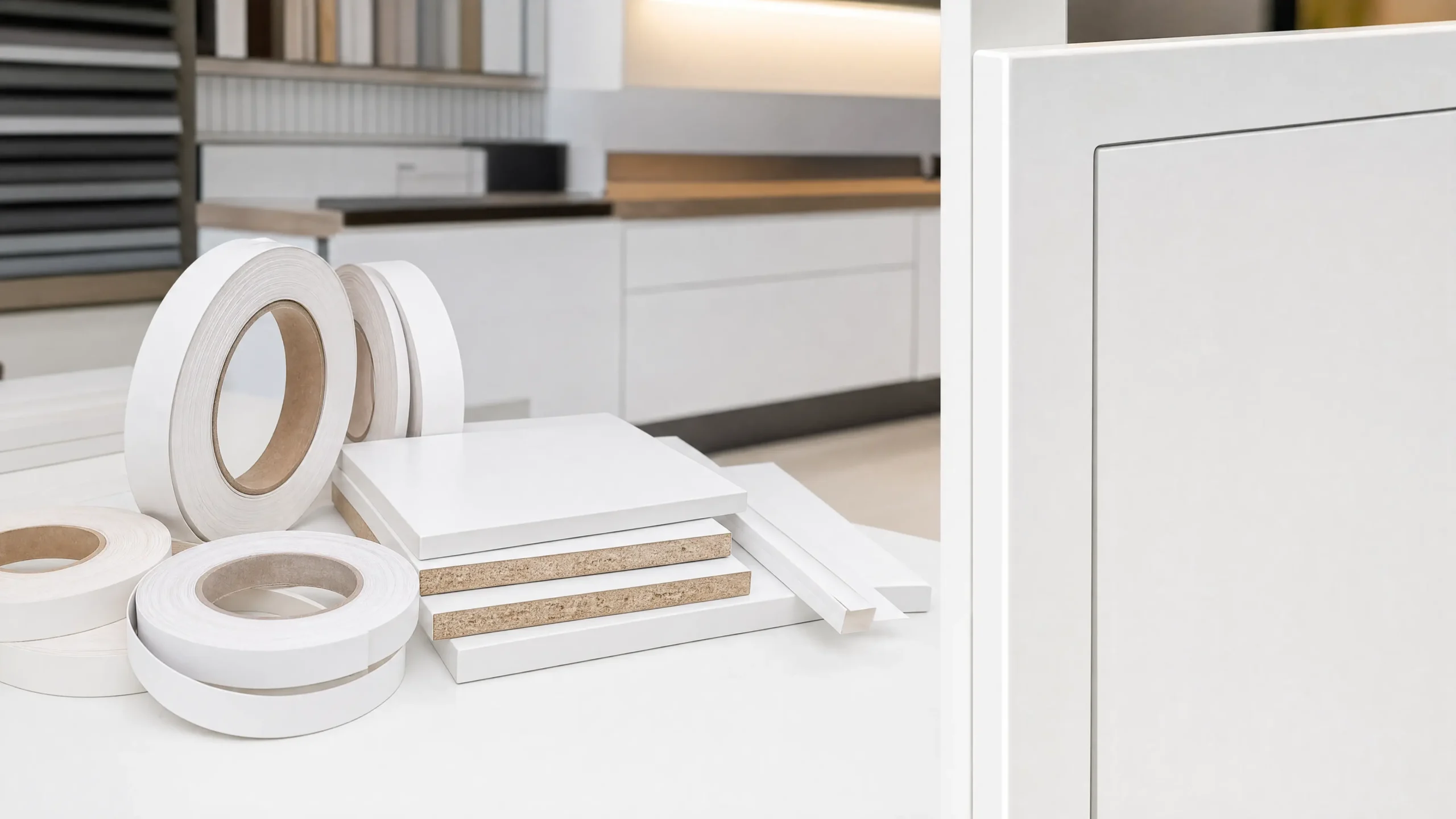
White edge banding tape is widely used in cabinet and furniture production, but matching white cabinet panels is often more difficult than many buyers expect. White may look simple, but in real production it can vary in undertone, gloss level, texture, and surface effect.
For cabinet manufacturers, distributors, and furniture component buyers, a poor white match can make the finished cabinet look inconsistent. Even a small difference between the panel and the edge can become obvious after installation, especially on flat modern cabinet doors and handleless kitchen designs.
That is why white cabinet projects require more than just choosing a generic white tape. A suitable match should be confirmed by color tone, finish, thickness, and physical sample comparison before mass production.
Why White Cabinet Panels Are Harder to Match
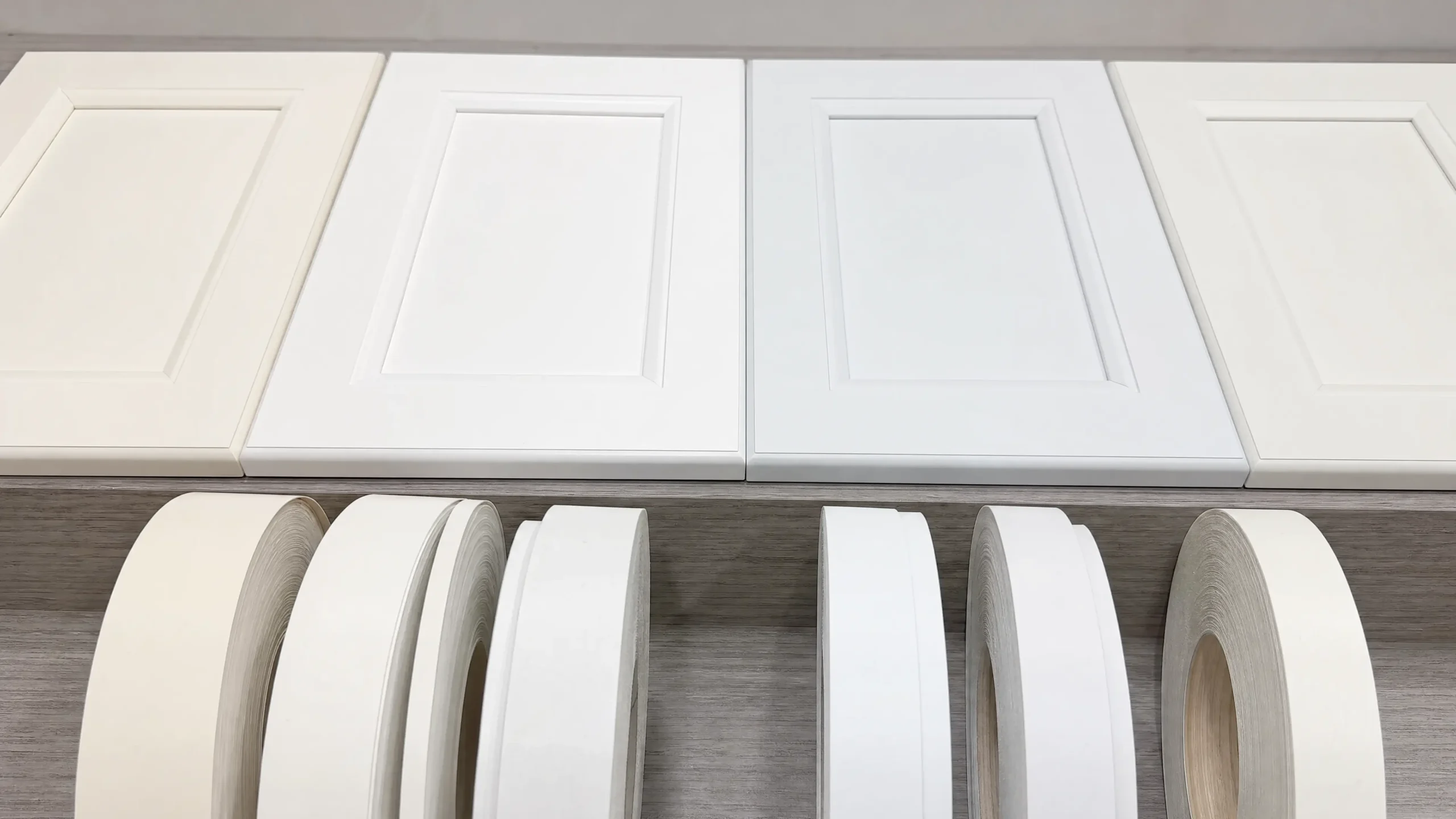
Many people assume that white is just white. In reality, white cabinet panels can have different visual characteristics, such as:
- Warm white
- Cool white
- Neutral white
- Bright white
- Off-white
- Cream white
- Chalk white
- Frosty white
Some white panels also vary because of:
- Gloss level
- Surface texture
- Decorative board brand
- Lighting conditions
- Laminate or coating type
- Batch difference
This is why matching white edge banding tape is usually more sensitive than matching darker colors or heavy wood grain patterns.
What Is White Edge Banding Tape?
White edge banding tape is an edging material used to cover the exposed sides of MDF, particle board, plywood, and other furniture panels. It is commonly used for kitchen cabinets, wardrobes, bathroom cabinets, office furniture, and shelving.
Compared with unfinished edges, white edge banding tape helps improve:
- Finished appearance
- Edge protection
- Surface consistency
- Moisture resistance
- Daily wear resistance
- Product value
In cabinet manufacturing, it is often used as cabinet edge banding or PVC edge banding tape for white cabinet doors, white carcass panels, shelves, and drawer parts.You can also explore our PVC Edge Banding page for more material and finish options.
What Affects White Edge Banding Matching?
For B2B buyers, a successful match depends on more than color alone. The following points should be checked together.
1. Undertone
Two white materials may both look white, but one can be warmer and another can be cooler. This difference becomes very clear when the edge banding is applied to the board.
2. Gloss Level
A glossy white cabinet panel should not be matched with a matt edge that looks dull. Likewise, a super matt board may look inconsistent if the edge has too much reflection.
3. Surface Texture
Some white decorative panels are smooth, while others may have fine texture, embossed effects, or soft-touch surfaces. The edge should visually fit the panel surface.
4. Thickness and Width
The correct thickness and width depend on the application. Common PVC edge banding tape thicknesses include 0.4mm, 1mm, 2mm, and 3mm.
5. Board Brand or Decor Reference
In some projects, buyers use decorative board or laminate references such as:
- Wilsonart Frosty White
- Wilsonart Frosty White 1573
- Formica New White
- Formica ColorCore New White
- Nevamar Chalk White
- Designer White
These names can help with reference, but final matching should still be confirmed by physical samples.
Common White Cabinet Panel Types
White cabinet projects usually fall into several practical categories:
Bright White Cabinets
These are used in clean, modern kitchen designs and often require a fresh, crisp white edge match.
Warm White or Cream White Cabinets
These need a slightly softer edge tone. A bright white tape may look too cold.
Frosty White and Cool White Cabinets
These are popular in modern furniture and laminate projects. A yellowish edge may look obviously wrong.
Super Matt White Cabinets
These need both color matching and low-reflection surface matching.
High-Gloss White Cabinets
These require a smooth, reflective edge finish that does not look dull beside the panel.
How to Match White Edge Banding Tape Correctly
For cabinet manufacturers, the most practical method is to follow a structured matching process.
Step 1: Confirm the Board Reference
Prepare the actual board sample, laminate sample, or decor reference.
Step 2: Confirm Thickness and Width
Select the required thickness and width based on the product structure and machine settings.
Step 3: Confirm the Surface Finish
Check whether the project needs gloss, matt, super matt, or another finish.
Step 4: Compare Physical Samples
Place the white edge banding tape directly against the panel under normal lighting and production lighting.
Step 5: Confirm Bulk Order Details
After sample approval, confirm specifications, estimated quantity, packing, and production lead time.
This process helps reduce mismatch risk before production begins.If you need a matching solution for your project, you can submit a custom edge banding quote request here.
Why Photos Are Not Enough for White Matching
White is one of the most difficult colors to judge from photos. A phone image may make the panel look warmer or cooler than it really is. Different screens can also change how the white appears.
Photos are useful for initial communication, but they are not enough for final confirmation.
For white cabinet projects, buyers should send:
- Physical board samples
- Laminate samples
- Decor code or brand reference if available
- Required thickness and width
- Application details
- Estimated order quantity
At FUJUAN, final color matching is confirmed by physical samples or board samples, not by photos alone.Learn more about our inspection process on the Quality & Compliance page.
For more details about sample confirmation, you can read our guide: Why Physical Samples Matter in Edge Banding Color Matching For Bulk Orders.
White Edge Banding Tape for Kitchen Cabinets
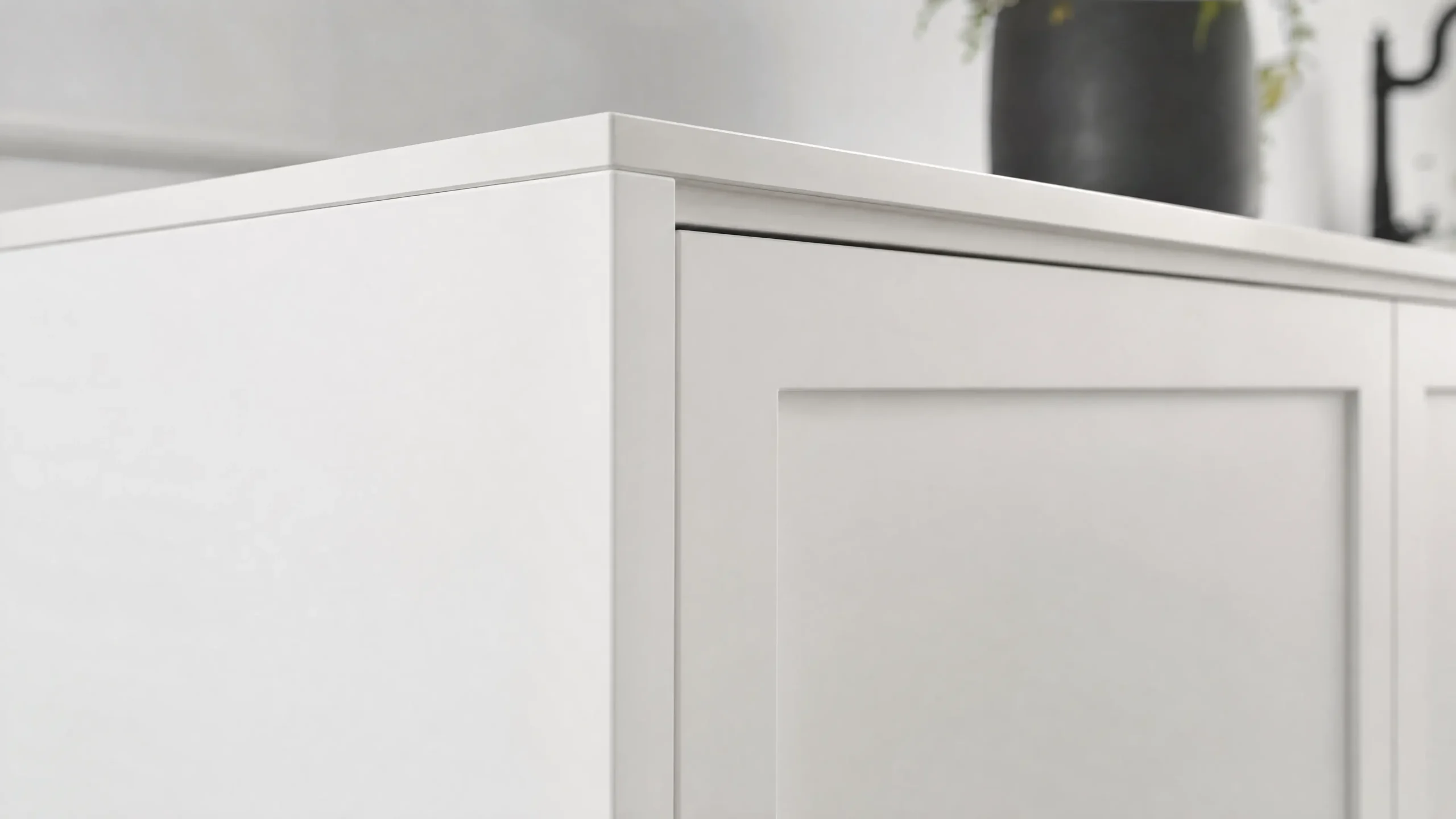
White cabinets remain one of the most popular choices in kitchen projects because they create a clean, bright, and modern appearance. However, white kitchens are also the type of project where edge mismatch is easiest to notice.
For kitchen cabinet manufacturers, a good white match should help achieve:
- Clean visual continuity
- Consistent color appearance
- Matching gloss or matt effect
- Better overall cabinet quality
- More professional project delivery
This is especially important for slab doors, handleless cabinets, and other minimalist cabinet styles.
What Buyers Should Confirm Before Ordering
Before placing a bulk order for white edge banding tape, buyers should confirm:
- White panel reference
- Required thickness
- Required width
- Finish type
- Quantity
- Machine compatibility
- Packing requirements
- Lead time
- Sample approval result
This is the safest way to improve matching accuracy and reduce rework.For production planning and delivery details, you can also review our Lead Time & Capacity page.
Why Work With a Supplier That Supports Color Matching
For white cabinet projects, buyers often need more than standard stock material. A qualified supplier should be able to support:
- White tone matching
- Gloss and matt matching
- Sample confirmation
- Stable batch consistency
- Standard and customized specifications
- Support for cabinet and furniture production
A reliable color matched edge banding solution is especially valuable when buyers are producing white kitchens, wardrobes, and full-house furniture collections.
FAQ: White Edge Banding Tape
What is the best way to match white edge banding tape?
The best way is to compare the edge banding tape with the actual cabinet panel using physical samples. Buyers should check undertone, gloss level, texture, thickness, and overall appearance before bulk production.
Why does white edge banding tape look different from the white panel?
This usually happens because of undertone difference, gloss mismatch, lighting conditions, or surface texture difference.
Can white edge banding tape match branded white laminates?
Yes. It can be matched based on physical samples or decor references such as Wilsonart Frosty White, Formica New White, or Nevamar Chalk White. Final confirmation should still be based on actual samples.
Are photos enough for matching white cabinet panels?
No. Photos can be used for reference, but they are not enough for final matching because white is highly sensitive to lighting and screen display differences.
What thickness is commonly used for white cabinet edge banding?
Common thicknesses include 0.4mm, 1mm, and 2mm. The right option depends on the cabinet structure, application, and expected durability.
Conclusion
White edge banding tape is one of the most important finishing materials for white cabinet projects, but white matching should never be treated as a simple color choice. For cabinet manufacturers, the right match depends on undertone, gloss, surface finish, thickness, and sample confirmation.
If you are sourcing white edge banding tape for white cabinet panels, kitchen cabinets, or furniture projects, send us your board sample, finish requirement, and estimated quantity. Our team can help recommend a suitable matching solution for your bulk production.