
PVC vs. ABS Edge Banding
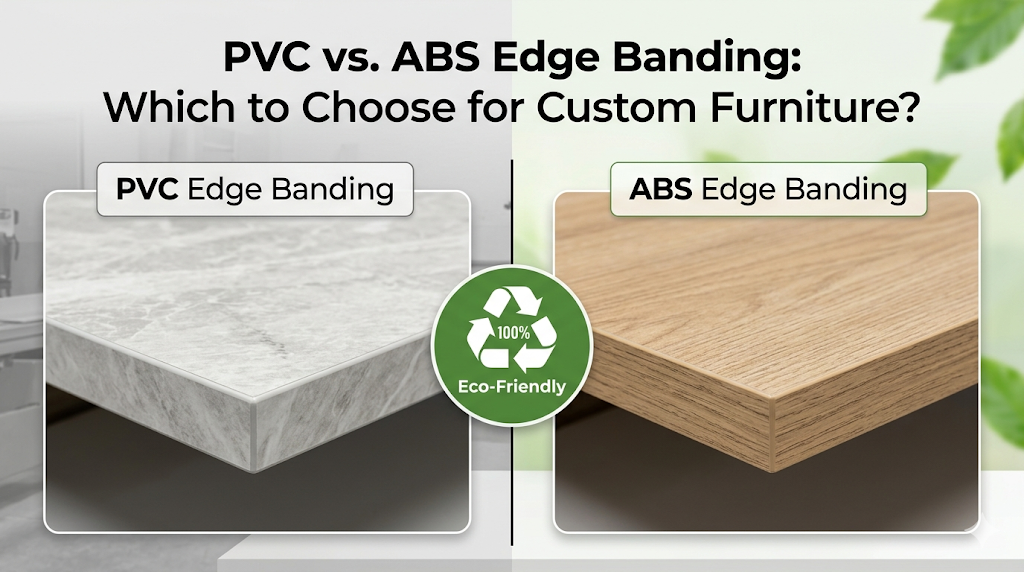
PVC vs. ABS Edge Banding: Which is Better for Custom Furniture? Meta Description: Compare PVC and ABS edge banding for custom furniture manufacturing. Learn the differences in cost, eco-friendliness, and durability to make the best choice.
PVC vs. ABS Edge Banding: Which is Better for Custom Furniture?
For custom furniture manufacturers and cabinet makers, choosing the right edge banding tape is critical for both the final product’s aesthetic appeal and its long-term durability. Today, the two most popular plastic edge materials in the woodworking industry are PVC (Polyvinyl Chloride) and ABS (Acrylonitrile Butadiene Styrene).
But when quoting a project, which material should you choose? Let’s break down the pros and cons.
1. The Industry Standard: PVC Edge Banding
PVC edge banding is the undisputed king of the global furniture market. It is highly valued for its exceptional flexibility, durability, and cost-effectiveness.
- Pros: PVC offers excellent impact resistance and forms a strong bond with furniture boards. It is incredibly easy to machine, meaning your trimmers and routers will leave a smooth finish without a whitening effect (especially important for dark colors). Furthermore, it is highly customizable. Whether you need standard 1mm pvc edge banding or thicker 2mm options, PVC provides a 99% color match for solid colors and realistic wood grain edge banding.
- Cons: Traditional PVC is not completely biodegradable and produces toxic smoke if incinerated, which has led to tighter regulations in some strict European markets.
2. The Eco-Friendly Alternative: ABS Edge Banding
ABS edge banding is rapidly gaining market share, particularly in high-end European and North American custom furniture sectors, due to its eco-friendly profile.
- Pros: ABS is 100% recyclable, chlorine-free, and heavy-metal-free. When incinerated, it only produces water and carbon dioxide. Beyond its green credentials, ABS is lighter than PVC and offers superior heat resistance, making it ideal for kitchen environments near ovens or stovetops.
- Cons: The primary drawback of ABS is the cost. It is generally more expensive to manufacture than PVC. It is also slightly more rigid, requiring sharper cutting tools during the edge-banding process.
Conclusion: Which to Choose?
If your primary focus is cost-efficiency, incredible flexibility, and a massive variety of finishes (like a crisp white edge tape for modern designs), PVC edge banding remains the most practical choice. However, if you are targeting high-end, eco-conscious consumers or exporting to strict European markets, upgrading to ABS edge banding is a strategic investment.
Looking for a reliable manufacturer? Fujuan Group supplies premium PVC and eco-friendly ABS edge solutions with precise color matching. Contact our team today for OEM/ODM services and free samples!