
PVC vs ABS Edge Banding For Bulk Cabinets
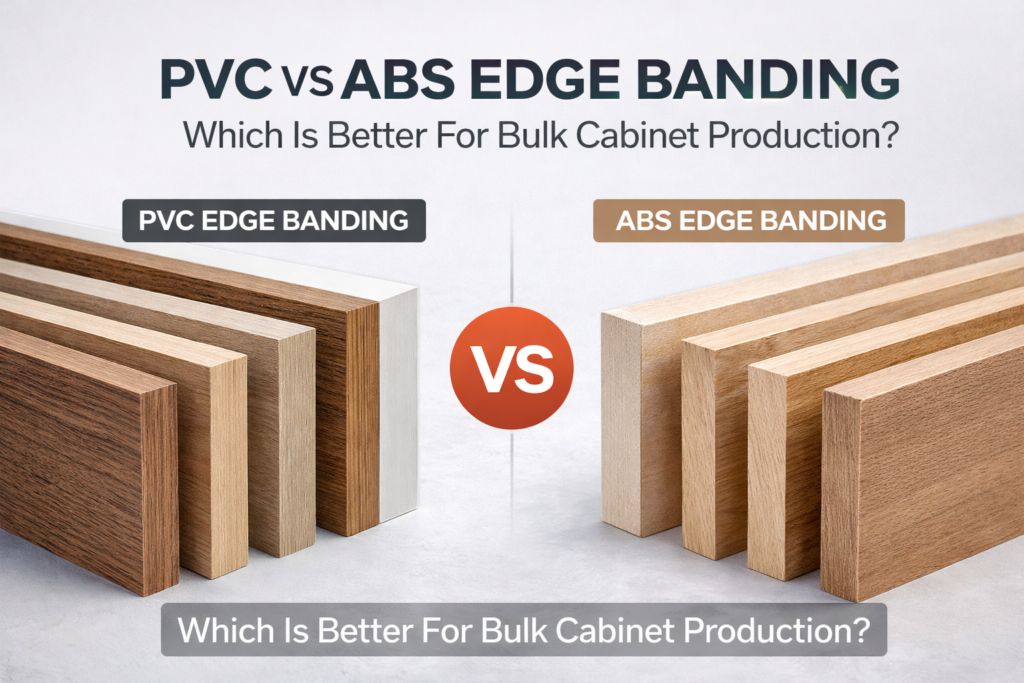
For bulk cabinet production, PVC edge banding is often the more common choice. It is cost-effective, versatile, and widely used in furniture manufacturing. ABS edge banding may be a better fit when buyers have specific material preferences, market requirements, or product positioning goals. The final choice depends on application, finish, budget, machine compatibility, and order needs.
For cabinet manufacturers, furniture factories, distributors, and bulk buyers, material choice affects more than product appearance. It also affects production stability, cost control, and long-term planning.
This guide compares PVC vs ABS edge banding for bulk cabinet production. It covers the main differences, common use cases, and the key points buyers should confirm before placing an order. If you are also reviewing specifications, you can read our guide on How To Choose Edge Banding Thickness For Bulk Cabinets.
Table Of Contents
- What Is PVC Edge Banding?
- What Is ABS Edge Banding?
- PVC vs ABS Edge Banding: Key Differences
- Which Material Is Better For Bulk Cabinet Production?
- When To Choose PVC Edge Banding
- When To Choose ABS Edge Banding
- What Bulk Buyers Should Confirm Before Ordering
- Why Physical Samples Matter For Color Matching
- Final Recommendation
- FAQ
What Is PVC Edge Banding?
PVC edge banding is one of the most widely used edge banding materials in cabinet and furniture manufacturing. It offers flexible processing, stable performance, and a wide range of colors, finishes, and surface effects.
For many bulk cabinet projects, PVC edge banding is used because it supports:
- a broad range of decorative finishes
- consistent production performance
- practical cost control
- compatibility with many edging applications
- custom specifications for width, thickness, and finish
PVC edge banding is commonly used in kitchen cabinets, wardrobes, office furniture, bathroom cabinets, and many other furniture lines. If you want to review available product options, you can also visit our PVC Edge Banding page.
What Is ABS Edge Banding?
ABS edge banding is another material used in furniture manufacturing and cabinet production. Buyers may consider ABS when they have specific project requirements, customer preferences, or market expectations related to material selection.
ABS edge banding can also be used for furniture and cabinet applications. However, for bulk buyers, the decision is usually based on a combination of product positioning, material preference, finishing needs, and production planning.
In practice, ABS edge banding is often discussed in projects where buyers want to compare material options before confirming large-volume orders.
PVC vs ABS Edge Banding: Key Differences
When comparing PVC vs ABS edge banding, bulk buyers usually focus on the following areas.
1. Cost And Procurement Planning
For many bulk cabinet projects, PVC edge banding is often the more cost-effective option. This is one reason it is widely used in large-volume furniture manufacturing.
ABS edge banding may be considered for specific project needs, but buyers should review the total procurement plan, including:
- target material
- finish requirements
- order volume
- product positioning
- market expectations
For high-volume cabinet production, cost control is often a major reason why PVC remains the more common choice.
2. Appearance And Finish Options
Both PVC and ABS edge banding can be used for cabinet and furniture applications, but the right choice depends on the required finish and product style.
Bulk buyers usually compare:
- color matching requirements
- matte or gloss finish
- texture and surface effect
- consistency with board decor
- overall product positioning
For custom projects, appearance should never be judged by photos alone. Physical confirmation is more reliable, especially when matching with actual boards. You can review our Color Match & Samples page for more information.
3. Processing And Machine Compatibility
For cabinet manufacturers and furniture factories, machine compatibility is a practical issue. Even if two materials look similar in specification, buyers still need to confirm how they perform on the production line.
Important checks include:
- edging machine compatibility
- trimming quality
- scraping performance
- speed and temperature settings
- finishing stability across bulk orders
For large-volume production, stable processing is essential. Buyers should always confirm material choice against their own machine conditions and product standards.
4. Durability And Application
Material selection should also match the actual use of the product. Some cabinet lines require stronger focus on cost efficiency, while others require more attention to market positioning or end-customer expectations.
Bulk buyers should compare PVC vs ABS edge banding based on:
- cabinet type
- furniture category
- daily use conditions
- transport and installation needs
- finish durability expectations
The best material is not simply the one that sounds better in theory. It is the one that fits the project, the production line, and the order plan.
5. Flexibility In Custom Orders
For made to order production, bulk buyers often need flexible support for:
- width
- thickness
- finish
- surface texture
- color matching
- batch consistency
In many custom cabinet and furniture projects, production flexibility is just as important as the material name itself. Buyers should confirm whether the supplier can support their specification requirements across the full order volume.
Which Material Is Better For Bulk Cabinet Production?
For most bulk cabinet production projects, PVC edge banding is often the more common and practical choice. It is widely used because it offers a good balance of cost, appearance options, and production efficiency.
However, ABS edge banding may be the better choice when buyers have:
- specific material preferences
- customer-driven requirements
- market-based material expectations
- product positioning that requires a particular material choice
In other words, there is no single answer for every project. For bulk cabinet production, the better material depends on the actual product line, target market, finishing needs, machine compatibility, and purchasing plan.
When To Choose PVC Edge Banding
PVC edge banding is often a practical choice when buyers need:
- cost-effective material planning
- broad finish and color options
- stable processing for bulk cabinet production
- custom specifications for width and thickness
- reliable support for cabinet and furniture manufacturing
For many cabinet manufacturers and distributors, PVC edge banding is the preferred option for standard bulk orders because it aligns well with production efficiency and commercial planning.
When To Choose ABS Edge Banding
ABS edge banding may be considered when buyers need:
- a specific material option for a target market
- a product line with defined material preference
- support for projects where ABS is requested by the buyer or end customer
- comparison testing before final material approval
For this reason, ABS edge banding is often part of a material comparison process in bulk furniture and cabinet sourcing.
What Bulk Buyers Should Confirm Before Ordering
Before confirming PVC or ABS edge banding for a bulk order, buyers should prepare clear project details. This helps suppliers recommend the right specification and reduces unnecessary back-and-forth.
Useful information includes:
- material preference
- required thickness
- required width
- finish requirement
- color or decor reference
- cabinet or furniture application
- estimated order volume
- machine type or production condition, if relevant
For custom projects, buyers should also confirm whether the order is based on a physical board sample, decor reference, or approved standard sample.
Why Physical Samples Matter For Color Matching
When comparing PVC vs ABS edge banding, buyers should not rely only on photos or screen-based references. Physical samples are important because they help confirm:
- real color appearance
- surface finish
- board matching effect
- thickness impression
- trimming result
- fit for the final product line
For cabinet manufacturers and furniture factories, this is especially important before mass production. Sample confirmation can reduce communication errors and improve batch consistency.
For more accurate matching, buyers should confirm samples in advance through our Color Match & Samples support page.
Final Recommendation
If the goal is efficient and cost-controlled bulk cabinet production, PVC edge banding is often the more common choice. It is widely used in furniture manufacturing because it supports practical production planning, flexible specification control, and broad finish options.
If the project has specific material expectations or market-driven requirements, ABS edge banding may also be considered. The final decision should be based on product positioning, finish requirements, machine compatibility, and order volume.
For most bulk buyers, the best approach is simple: compare the material against the actual cabinet application, confirm specifications clearly, and approve samples before mass production.
If you are planning a custom cabinet or furniture project, it is also helpful to review our PVC Edge Banding, Color Match & Samples, and Contact Us pages.
FAQ
Is PVC or ABS edge banding better for cabinets?
For most bulk cabinet projects, PVC edge banding is often the more common choice because it offers a good balance of cost, finish options, and production efficiency. ABS edge banding may be considered when buyers have specific material or market requirements.
What is the difference between PVC and ABS edge banding?
The difference usually comes down to material preference, cost planning, finish expectations, and project requirements. For bulk buyers, the right choice depends on cabinet application, production conditions, and order goals.
Which material is better for bulk furniture production?
For many large-volume furniture and cabinet orders, PVC edge banding is often the more practical option. However, Buyers may choose ABS edge banding when they have specific material preferences, market requirements, or product positioning goals.
Why should buyers confirm physical samples before placing bulk orders?
Physical samples help buyers confirm real color, finish, thickness effect, and board matching accuracy. This is especially important for custom edge banding and bulk production projects.
Need Support For Custom Edge Banding Orders?
If you are comparing PVC vs ABS edge banding for a cabinet or furniture project, contact us with your material preference, thickness, width, finish, and estimated order volume.
We focus on made to order edge banding for bulk orders. Physical sample confirmation is recommended before production for more accurate matching and smoother order coordination.