
How To Choose The Right Edge Banding Thickness For Bulk Cabinet Production
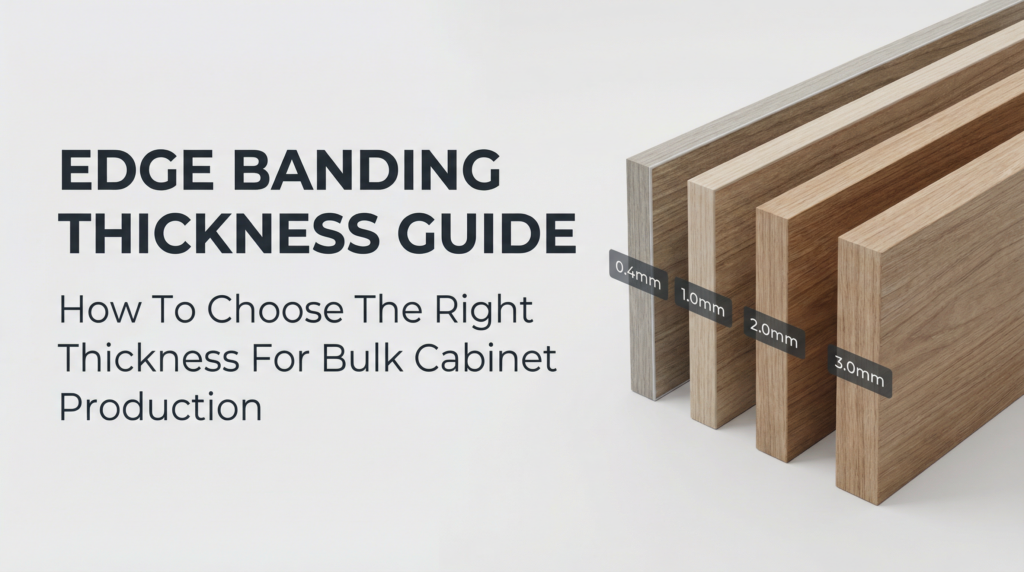
Choosing the right edge banding thickness is a key step in bulk cabinet production. For cabinet manufacturers, furniture factories, and distributors, thickness affects more than appearance. It also affects durability, machine compatibility, production efficiency, and cost control.
Many buyers focus first on color, width, or material. However, thickness also has a direct impact on the finished result. It affects cabinet appearance, edge performance, and production consistency in large orders.
This guide explains how to choose the right edge banding thickness for bulk cabinet production. It also covers common thickness options, typical uses, and key checks before bulk orders. If you are reviewing material options, you can also visit our PVC Edge Banding page.
Table Of Contents
- Why Edge Banding Thickness Matters In Cabinet Manufacturing
- Common Edge Banding Thickness Options
- How To Choose Thickness Based On Cabinet Application
- Material Also Affects Thickness Selection
- Machine Compatibility And Production Stability
- Appearance And Market Positioning
- Cost Considerations In Bulk Orders
- Why Sample Confirmation Is Important
- What Bulk Buyers Should Prepare Before Asking For A Quote
- Choosing The Right Thickness For Long-Term Production Success
Why Edge Banding Thickness Matters In Cabinet Manufacturing
Edge banding thickness directly affects the final result of a cabinet panel. In large-volume production, even a small mismatch can create problems during edging, trimming, polishing, transport, or installation.
The right thickness helps manufacturers balance appearance and function. A thinner option may create a cleaner look and lower material cost. A thicker option usually offers better impact resistance and a stronger edge profile.
For cabinet factories producing at scale, thickness often affects:
- surface protection
- edge durability
- resistance to impact during transport and installation
- visual consistency with cabinet design
- suitability for different furniture parts
- compatibility with edging machines
- material usage and production cost
For this reason, thickness should be confirmed together with width, material, finish, and application scenario before mass production. For custom projects, sample review is also important. If your project involves color matching, you can visit our Color Match & Samples page.
Common Edge Banding Thickness Options
In cabinet and furniture manufacturing, edge banding thickness usually ranges from thin decorative options to thicker protective options. Exact requirements vary by market and product line, but the most common choices are listed below.
0.4mm To 0.8mm
This range is often used for lighter-duty furniture parts, interior components, or cost-sensitive applications. It is generally suitable for surfaces that do not face frequent impact.
Typical uses include:
- cabinet back panels
- interior shelves
- low-impact furniture components
- decorative parts that require a slim edge appearance
In bulk cabinet production, thinner material can help reduce cost. However, buyers still need to confirm whether the finished product requires stronger protection.
1.0mm
This is one of the most common thickness options in cabinet and furniture manufacturing. It offers a practical balance between appearance, durability, and production efficiency.
It is often used for:
- standard cabinet doors
- side panels
- wardrobes
- office furniture
- residential furniture with medium-duty use
For many bulk buyers, 1.0mm is a stable choice because it provides a clean finish and suitable daily-wear resistance.
2.0mm
This thickness is widely used when stronger edge protection is required. It is often selected for products that face more handling, more impact, or longer service life.
Common applications include:
- kitchen cabinets
- bathroom cabinets
- commercial furniture
- high-traffic furniture applications
- premium furniture lines
Compared with thinner options, 2.0mm edge banding usually offers better impact resistance and a more defined edge appearance.
3.0mm And Above
Thicker edge banding is generally used for special furniture designs, heavy-duty applications, or products that require a stronger edge profile. It may also be used in selected customized projects.
However, thicker material requires closer control of machine settings, trimming quality, and overall processing stability. In bulk orders, thickness above standard ranges should always be confirmed against real application needs and machine capability.
How To Choose Thickness Based On Cabinet Application
There is no single thickness that fits every cabinet project. The right choice depends on where the edge banding will be used and how the cabinet will perform in daily use.
Cabinet Doors
Cabinet doors usually require a balance between visual quality and durability. For many projects, 1.0mm or 2.0mm is a common choice.
If the cabinet door belongs to a premium kitchen line or a frequently used storage unit, a thicker option may provide better long-term protection.
Side Panels And Visible Exterior Panels
Visible panels need both appearance consistency and edge protection. In many cases, buyers select a thickness that provides a clean finish and helps reduce damage during assembly and installation.
For standard cabinet collections, 1.0mm is often practical. For more demanding use environments, 2.0mm may be a better option.
Interior Shelves And Less Exposed Parts
Interior parts usually face less impact than exterior edges. In these cases, thinner edge banding may be acceptable.
Even so, buyers should confirm that thinner material runs smoothly on their edging machines and maintains a consistent appearance across the production batch.
Commercial Or High-Traffic Furniture
Commercial furniture often faces more frequent contact, more transport stress, and more wear over time. In these applications, thicker edge banding is often preferred because it provides stronger edge protection and better long-term performance.
Recommended Thickness For Different Cabinet Parts
Below is a simple reference for bulk buyers:
- Cabinet doors: often 1.0mm or 2.0mm
- Side panels: often 1.0mm or 2.0mm
- Interior shelves: often 0.4mm to 0.8mm
- Commercial furniture: often 2.0mm or above
This is only a general guide. Final thickness should still be confirmed according to board application, product positioning, and machine conditions.
Material Also Affects Thickness Selection
Thickness should not be evaluated alone. The edge banding material also affects the final result.
PVC edge banding is widely used in cabinet and furniture manufacturing because it offers flexible processing, a wide range of colors and finishes, and reliable performance for many product lines. ABS edge banding may also be considered when buyers have specific material or market requirements.
When selecting thickness, buyers should confirm:
- material type
- panel application
- surface finish
- expected durability
- machine processing conditions
- color and texture matching requirements
The same thickness may perform differently depending on the material and production environment. If your project requires custom color and finish coordination, physical confirmation is recommended before production through our Color Match & Samples page.
Machine Compatibility And Production Stability
For bulk cabinet production, machine compatibility is as important as product specification. A thickness that looks suitable on paper may still create problems if it does not match the factory’s edging machines, trimming units, or processing settings.
Before confirming an order, buyers should check whether the selected thickness works well with:
- edging machine configuration
- trimming and scraping units
- glue application system
- feed speed and temperature settings
- required finishing standard
Stable processing is essential in large-volume production. Even if a thicker edge banding option offers better protection, it must still run efficiently and consistently on the production line.
For this reason, sample testing before mass production is strongly recommended.
Appearance And Market Positioning
Thickness also affects how the cabinet is perceived by the end customer. In some product lines, a thinner edge creates a more minimal look. In other cases, a thicker edge helps the cabinet feel more durable and more premium.
For bulk buyers serving different markets, thickness should match customer expectations, pricing strategy, and furniture positioning.
For example:
- economical furniture lines may prefer thinner and more cost-controlled options
- mid-range cabinets often use balanced specifications
- premium or commercial products may require thicker options for stronger protection and perceived quality
The right choice depends on both technical needs and business goals.
Cost Considerations In Bulk Orders
When sourcing edge banding for bulk cabinet production, thickness directly affects material usage and procurement cost. Thicker edge banding generally requires more material, which may increase unit cost.
However, cost should not be evaluated alone. A lower-cost thickness is not always the best choice if it increases damage risk, reduces product life, or creates production instability.
Bulk buyers should review thickness from a total-value perspective, including:
- material cost
- processing efficiency
- finished appearance
- durability in use
- transport and installation resistance
- consistency across large-volume production
The goal is not to choose the thinnest or cheapest option. The goal is to select the most suitable thickness for the product category and order requirement.
Why Sample Confirmation Is Important
Photos, catalogs, and specification sheets are useful references. However, sample confirmation remains an important step before large production runs.
For thickness selection, physical samples help buyers check:
- edge appearance on the actual board
- overall visual proportion
- machine compatibility
- trimming quality
- color and texture match
- suitability for the final cabinet design
For custom projects, sample confirmation is even more important because thickness, finish, and color often need to work together. In large-volume cabinet manufacturing, confirming samples in advance can reduce communication errors and production risk.
What Bulk Buyers Should Prepare Before Asking For A Quote
To receive a more accurate recommendation, bulk buyers should prepare clear project information before requesting a quotation or sample.
Useful information includes:
- required thickness
- required width
- material preference
- panel application
- color or decor reference
- finish requirement
- estimated order volume
- machine type or production condition, if relevant
Clearer information helps suppliers recommend a more suitable specification and reduces unnecessary back-and-forth during order confirmation. If you are ready to discuss your project, please visit our Contact Us page.
Choosing The Right Thickness For Long-Term Production Success
The right edge banding thickness helps cabinet manufacturers improve consistency, reduce production risk, and deliver better finished products. It supports product durability, production efficiency, and market positioning.
For most bulk cabinet projects, thickness should be selected based on actual application, product quality target, machine compatibility, and long-term cost efficiency. There is no single answer for every project. However, careful evaluation and sample confirmation can help buyers make a more reliable decision.
If you are sourcing made to order custom edge banding for cabinet production, it is best to confirm thickness together with width, color, finish, and board application before placing a bulk order.
Need Support For Custom Edge Banding Orders?
If you are planning a bulk cabinet project and need support with edge banding thickness selection, color matching, or sample confirmation, contact us with your board application, required size, and estimated order volume.
We focus on custom edge banding for bulk orders only. Physical sample confirmation is recommended for accurate color matching before production. We also support discussions about custom specifications and production lead time based on your order plan.
We support custom edge banding production for cabinet and furniture manufacturers, distributors, and bulk buyers. Sharing your sample or board reference in advance can help improve matching accuracy and production efficiency.